
Haddonfield Real Estate Risks: What Could Slow Appreciation
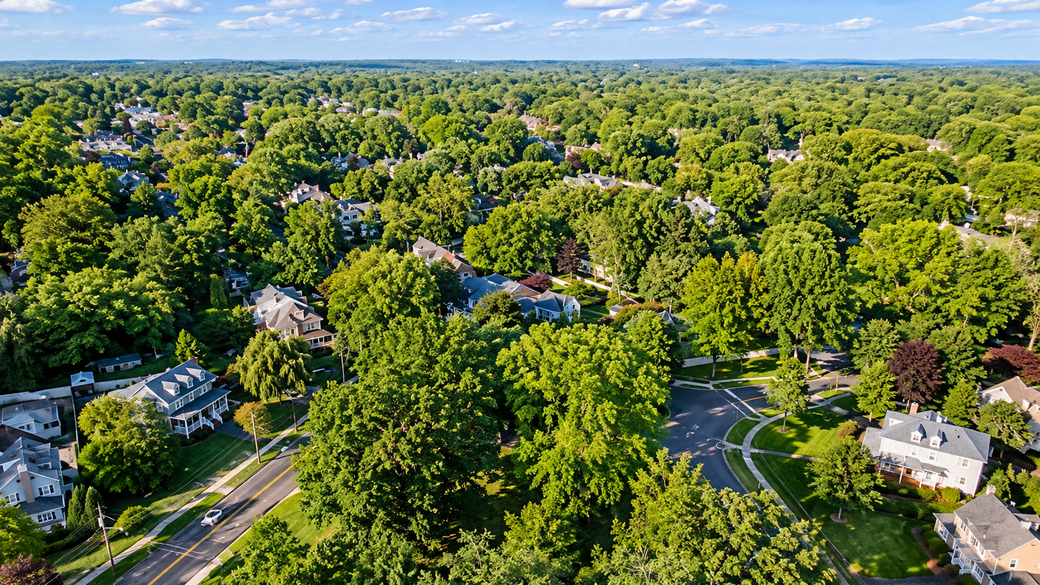
Haddonfield real estate risks are more likely to appear as slower appreciation, longer marketing periods, and wider pricing gaps between turnkey homes and properties needing work than as a uniform decline. Buyers and investors should watch supply, affordability, recurring costs, and address-specific exposure before making an offer. Haddonfield is a borough in Camden County, New Jersey, with limited land and an established housing stock, so its risks differ from those in fast-growing suburbs. The key question is what could slow Haddonfield home appreciation when buyers become more selective.
Who Should Read This
This guide is for buyers weighing long-term value, investors stress-testing a purchase, and current owners tracking equity risk in Haddonfield. It does not predict a crash. It identifies the variables that matter, explains how they can affect pricing, and shows where to look for early signs of softer conditions.
Haddonfield Market Snapshot 2026
Haddonfield's 2026 risk baseline is best read through four connected market signals: median sale-price direction, months of supply, median days on market, and the share of listings receiving price reductions.
Aggregated MLS data through August 2026 showed a tight but not frenzied market: a reported year-to-date single-family median of about $999,999, roughly 1.8 months of supply at the end of August, and an average of about 36 days on market. Trailing 12-month measures that include all home types ran lower, generally in the mid-$800,000s to about $900,000. That spread is itself a reminder of how much a handful of high-end closings can move a small borough's headline numbers.
The more useful pattern is whether inventory, selling time, and price adjustments begin rising together among comparable homes. When those signals align, buyers may be gaining leverage before closed-sale prices fully reflect the change.
Reviewing active competition by price band and condition is especially important in Haddonfield. A renovated home with current systems may attract a different buyer response than an older home with deferred maintenance, even when both sit within the same broad price range.
Haddonfield Real Estate Risks: Supply-Side Pressure From New Inventory
Supply-side risk is low to moderate in Haddonfield because the borough is substantially built out and has limited opportunity for broad subdivision development. Its established street pattern, older housing stock, and constrained lot supply make a large wave of competing new homes less likely than in expanding outer-suburban markets.
The more relevant issue is redevelopment and replacement inventory. In February 2025, the Borough approved Woodmont Properties as redeveloper of the former Bancroft site for 98 rental units across three buildings, including 86 market-rate and 12 affordable units, down from an earlier 120-unit proposal. As of early 2026 the project was in the design phase and expected to go before local boards in spring 2026 (Borough of Haddonfield). Because these are rental apartments, the most direct competition is with the borough's limited rental stock rather than with single-family resales, but one redevelopment location can still change the available housing mix where there is little vacant land elsewhere.
This differs from a master-planned community delivering hundreds of similar homes at once. Still, new construction, major renovations, and carefully prepared resale homes can reset buyer expectations. An older property with deferred maintenance can face more resistance when buyers have alternatives with updated systems, functional layouts, and fewer immediate capital needs.
For Haddonfield, the central risk is selective competition within a narrow buyer segment, not widespread oversupply. Buyers and investors should compare condition, lot utility, taxes, renovation scope, and time on market against the closest alternatives rather than relying only on borough-wide averages.
Demand-Side Risk: Employment, Population, and Migration Trends
Demand risk in Haddonfield is primarily regional because buyers are connected to the wider regional economy rather than one dominant local employer. Professional services, health care, education, finance, legal work, and regional corporate employment all influence the local buyer pool. That diversity reduces reliance on one sector, but it does not remove the effect of slower hiring, weaker bonus income, or fewer employer-driven relocations.
Regional labor conditions have been supportive lately. The Camden metropolitan division, which includes Camden County, recorded a 1.7-percentage-point drop in unemployment from September 2025 to September 2026, tied for the largest decline among U.S. metropolitan divisions, and New Jersey's statewide rate fell to 4.2% (U.S. Bureau of Labor Statistics).
The U.S. Census Bureau's 2020–2024 estimates show that 90.6% of Haddonfield residents age one and older lived in the same home a year earlier, reflecting a stable, established residential borough (U.S. Census Bureau). That stability can support long-term demand, yet it can also leave a relatively thin active buyer pool when financing costs rise or households postpone a move.
The earliest demand weakness may not appear in a broad population figure. It is more likely to emerge through slower contract activity, more withdrawn listings, longer marketing periods, and repeated price adjustments for homes with dated finishes or ambitious pricing.
Demand risk is moderate rather than high because Haddonfield benefits from an established location and a diversified regional employment base. However, limited inventory does not protect every property equally. Homes requiring substantial updates, carrying high recurring costs, or appealing to a narrow buyer profile can lose momentum first.
Affordability Ceiling: When Prices Outrun Buyer Purchasing Power
Affordability is a meaningful Haddonfield real estate risk because buyers evaluate the complete monthly obligation, not the sale price alone. Haddonfield's median household income was $200,400 in the 2020–2024 Census estimates, well above most surrounding markets, but ownership costs can also be substantial.
A practical price-to-income calculation starts with a prospective purchase price divided by household income. That ratio is only a screening tool. The more useful test is whether the actual monthly payment remains manageable after property taxes, insurance, down payment, maintenance, and immediate improvement costs are included.
There is no single price-to-income threshold at which every market stops appreciating. Prices often lose momentum when monthly ownership costs rise faster than incomes, available equity, or household savings. In Haddonfield, that pressure can be pronounced for homes combining a premium purchase price, higher taxes, and renovation needs.
Mortgage rates strengthen this ceiling by reducing the purchasing power of financed buyers. A household comfortable at one rate may become far more selective when its payment rises, even if list prices remain unchanged. The result is usually a smaller qualified buyer pool, rather than an immediate borough-wide decline.
Risk Factor Scorecard: How to Compare Haddonfield Properties
A meaningful comparison requires the same reporting period, housing type, and price band. The scorecard below summarizes the borough-level risk picture discussed in this guide.
| Risk factor | Borough-level risk | What to check for a specific home |
|---|---|---|
| New supply | Low to moderate | Nearby redevelopment and competing renovated listings |
| Demand and employment | Moderate | Contract activity and withdrawn listings in your price band |
| Affordability ceiling | Moderate to elevated | Full monthly payment, including taxes and insurance |
| Interest-rate sensitivity | Moderate | Payment at current rates with a cushion for change |
| Investor concentration | Low, property-specific | Deed history, rental registration, and intended use |
| Environmental and insurance | Address-specific | Flood map panel, drainage, roof age, and insurance quote |
| Tax and transfer costs | Moderate | Current tax bill and seller-paid fees above $1 million |
For a buyer or investor, the comparison matters only when it clarifies likely buyer behavior. A borough with limited land supply can still soften if ownership costs rise, updated listings accumulate, or higher-priced homes remain available longer. Reviewing current Haddonfield homes for sale alongside recently closed homes can help establish the active competition a prospective purchase would face at resale.
Haddonfield Real Estate Risks: Interest Rate Sensitivity
Haddonfield is moderately sensitive to interest-rate changes because many buyers rely on financing, even when they bring significant equity from a prior sale. The national 30-year fixed mortgage rate averaged 7.24% on October 29, 2026, up from 6.17% a year earlier and from roughly 6% at the start of 2026, according to Freddie Mac. As in the 2022–2023 rate cycle, higher borrowing costs tend to make buyers more selective, particularly when a home also carries substantial property taxes, insurance costs, and renovation needs.
The local effect is not identical across every price range. Move-up buyers with equity may have more flexibility than first-time buyers, while cash purchasers are less directly affected by mortgage rates. Even so, financing conditions affect the depth of the overall buyer pool and the price a financed household can comfortably support.
Rate pressure often appears first in homes with the least room for compromise. Properties needing immediate work, homes with outdated systems, and listings priced above their closest comparable sales may take longer to attract serious offers. Sellers can then face more negotiation around condition, timing, or price.
Buyers should model the total payment using current financing terms and include a cushion for taxes, insurance, and maintenance. A purchase that remains comfortable under conservative assumptions is generally less exposed to a short-term rate-driven slowdown.
Investor Concentration Risk
Investor concentration should be confirmed at the property and neighborhood level through recent deed records, rental-use rules, and Borough permit information. Haddonfield's owner-occupancy rate is high, and the Borough requires landlord registration for applicable rental dwellings, so broad investor concentration is less of a concern than in more renter-heavy markets. A higher share of investor-owned or short-term-rental activity on a particular block can still increase resale volatility when rental returns compress or owners decide to sell at the same time. Investors should verify the intended use, applicable local rules, and recent ownership patterns before relying on rental or resale assumptions.
Environmental and Insurance Risk: The Hidden Appreciation Drag
Environmental and insurance risk in Haddonfield is address-specific rather than uniform across the borough. Flood exposure can vary by drainage patterns, nearby waterways, elevation, and the applicable map panel. The official starting point for a property's effective flood-hazard information is the FEMA Flood Map Service Center.
Flood exposure matters because standard homeowners insurance generally does not cover flood damage. If flood coverage is required by a lender, or selected by an owner based on property history and risk tolerance, that premium becomes part of the long-term carrying-cost calculation. Basement water intrusion, grading issues, and stormwater management can also affect buyer perception outside a mapped high-risk area.
Insurance creates a separate affordability drag when roof age, electrical systems, replacement-cost estimates, prior claims, or older construction details affect coverage options. Haddonfield's established housing stock makes early insurance diligence particularly important. Buyers should request an address-specific quote before setting an offer ceiling and review drainage, roof age, mechanical systems, and documented water history.
These factors do not determine value alone. They can narrow the future resale audience when a home carries ownership costs or risk concerns that comparable properties do not.
Regulatory and Tax Risk: Policy Changes That Affect Haddonfield Values
Property taxes are a direct affordability consideration in Haddonfield because they affect the monthly payment available to a financed buyer. The Borough's tax and finance resources provide local information on assessments, tax billing, and municipal financial matters (Borough of Haddonfield).
A property's assessment and annual tax bill should be reviewed directly rather than estimated from purchase price alone. Changes in recurring ownership costs can narrow the buyer pool for homes already near a household's monthly payment limit. That effect can be most visible in higher-priced homes where taxes, insurance, and financing already consume a significant share of the budget.
Transfer costs at the top of the market changed as well. Since July 10, 2025, New Jersey's former buyer-paid 1% mansion tax has been replaced by a seller-paid Graduated Percent Fee of 1% of the full sale price on sales over $1 million up to $2 million, rising in steps to 3.5% above $3.5 million. Because a meaningful share of Haddonfield single-family sales now land near or above $1 million, sellers should factor the fee into net-proceeds estimates, and buyers may see more pricing cluster just below the $1 million and $2 million thresholds.
Land-use and redevelopment policy also deserves attention. Amendments to redevelopment plans, financial agreements such as payment-in-lieu-of-taxes arrangements, or zoning can affect nearby construction patterns, density, and buyer expectations. Investors considering rental income should confirm Borough requirements applicable to the property and intended use before relying on projected returns.
Pro-Tip: Track the number of Haddonfield listings receiving price reductions or returning to market each month. Those signals can reveal softening demand earlier than closed-sale prices because they show how active buyers are responding.
Get a Property-Specific Haddonfield Risk Review
Every risk in this guide plays out differently at the address level. Tara Hendricks and the HomeKey Real Estate Group team can help you compare active competition, recent sales, tax bills, and resale considerations for a specific Haddonfield home, whether you are buying, investing, or deciding when to sell. Call or text (609) 760-7847 or email njrealtortara@gmail.com.
Frequently Asked Questions
Is Haddonfield real estate at risk of a price drop?
A borough-wide price drop is not inevitable, but individual homes can face pressure when they are overpriced, need substantial work, or carry higher ownership costs than comparable listings. Longer marketing periods, more price reductions, and weaker contract activity among similar homes are the most useful warning signs. Haddonfield's stable residential base, with roughly 1.8 months of supply in August 2026, can support demand over longer holding periods, but it does not eliminate property-specific risk.
What is the biggest factor that could slow appreciation in Haddonfield?
The largest constraint is often affordability because buyers evaluate the full monthly cost of ownership, including financing, property taxes, insurance, and maintenance. With 30-year mortgage rates above 7% in late 2026, purchasing power is lower even when list prices remain unchanged. Homes requiring immediate renovation may face the narrowest qualified buyer pool.
How does Haddonfield compare for investment risk?
Haddonfield's limited lot supply lowers the chance of a broad new-construction surge, although redevelopment such as the Bancroft rental project can alter competition in particular segments. Its established residential character may moderate volatility, but a smaller number of transactions can make monthly price patterns uneven. Investors should compare active competition, carrying costs, permitted uses, and resale demand for the closest comparable properties.
How do rising insurance or property-tax costs affect home values in Haddonfield?
Higher insurance and property-tax costs reduce the amount a buyer can allocate to principal and interest, which can limit bidding power. The Borough's tax resources and an address-specific insurance quote are the most relevant inputs for evaluating a particular home. Costs become especially important when a property also needs repairs, updates, or flood-related coverage.
What signs should buyers watch to know if the Haddonfield market is weakening?
A weakening market usually becomes visible through more active listings, longer time on market, repeated price reductions, homes returning to market, and increased seller concessions. The signal is strongest when it appears across several comparable homes rather than one unusually priced listing. Pending-sale activity can also show a demand shift before closed-sale figures catch up.
Make a Confident Move in Haddonfield
Haddonfield real estate risks are easier to manage when buyers and investors test active competition, ownership costs, and property-specific exposure before committing. Focus on the payment, tax bill, insurance availability, condition, transfer costs, and behavior of comparable listings.
Categories
Recent Posts








GET MORE INFORMATION